Got Wood? Get Gas!
How Woodland BIO Turns Woody Biomass Into Drop‑In Sustainable Gasoline
Got wood? Get gas! Improve forest health, fuel a community. Woodland Biomass Innovations is building circular, local supply chains that convert low-grade woody biomass (tree tops, small-diameter stems, bark, and “dirty chips”) into low-carbon, drop-in gasoline that runs in today’s cars and flows through today’s gas stations. No new cars. No new pumps. Immediate impact.
“Got Wood? Get Gas!” highlights the simple idea behind our technology: local woody biomass in; reliable, low‑carbon gasoline out. It’s playful, but it’s also a promise.
What we make
Drop-in gasoline that meets and exceeds U.S. RBOB specifications
Biochar (pure carbon with high-impact use cases)
Renewable electricity exported to the grid when available
Why “drop-in” matters
“Drop-in” means zero changes for drivers or distributors:
Works with existing vehicles: Woodland BIO gasoline is chemically interchangeable with fossil gasoline and can be mixed in any ratio.
Works with existing infrastructure: Distributors can blend with current supply, add a dedicated 100% pump, or convert select stations.
Meets RBOB specification: Compatible with standard refining and wholesale logistics in the U.S. and globally.
How wood becomes gasoline (proven pathways, modernized)
Gasification: Woody biomass is converted to synthesis gas (H2 + CO + CO2).
Gas-to-Liquids (GTL): Catalytic conversion (e.g., Fischer–Tropsch–derived pathways) turns syngas into liquid hydrocarbons suitable for gasoline blending.
Finishing and compliance: The resulting gasoline exceeds RBOB requirements and features a zero-sulfur, zero-benzene profile—ideal for blending or direct wholesale.
What goes in, what comes out (commercial scale)
Feedstock: Up to ~250,000 tons/year of low-grade woody biomass (≈600 dry tons/day)
Gasoline: ~1,000 barrels/day (≈42,000 gallons/day)
Site: ~50 acres
Water: ~15,000 gallons/day
Co-products: Biochar and renewable electricity
Why start with woody biomass?
Abundant and renewable in Pennsylvania hardwood forests with a two-to-one growth-to-removal ratio
Clean, uniform, easier to process than trash or sewage
Enables sustainable forestry by creating a market for low-grade material that currently lacks outlets
Smells good and builds strong local support compared to odor-intensive waste streams
A circular economy you can drive today
Reduce: Shorten, localize, and stabilize fuel supply chains
Reuse: Keep existing vehicles and infrastructure in service longer
Recycle and regenerate: Convert low-grade woody biomass to fuel and biochar, returning carbon to soils and products
Community-first benefits
Local jobs: 50–100 direct roles at the inaugural Wellsboro, PA facility, plus downstream jobs in forestry, trucking, maintenance, and main-street services
Localized revenue: Money spent at the pump stays in-region instead of leaving for distant oil fields and refineries
Forest health: Demand for low-grade wood supports science-based silviculture, habitat diversity, and long-term timber value.
Resilience: Regionally sourced feedstock under multi-year contracts smooths price shocks tied to global oil swings
Biochar: the carbon-smart co‑product
Biochar is stable carbon with serious climate and performance upside:
Agriculture: Improves soil water retention, nutrient efficiency, and can reduce required NPK inputs
Animal agriculture: Bedding and feed amendment potential, including ammonia capture and methane reduction
Environmental remediation: Adsorbs heavy metals and organics; aids water/wastewater treatment
Industry: Potential coke substitute in steelmaking; performance additive for concrete and asphalt
Carbon sequestration: Each ton of biochar can represent approximately 2 tons CO2e stored over long timeframes; supports emerging biochar carbon removal markets
Grid-smart by design
Electricity co-generation: When internal demand dips, surplus renewable electricity can be sold to the grid
Credits and incentives: Renewable electricity production tax credits (PTC) and renewable energy credits (RECs) may apply subject to market conditions
Why this complements (not replaces) EVs
Electrification is important—but it’s not one-size-fits-all. Challenges today include:
Higher manufacturing emissions for EVs versus ICE vehicles
Grid capacity and renewable variability hurdles
Battery material constraints and recycling scale-up Sustainable vehicle fuels (SVFs) decarbonize the vehicles and distribution network we already have. Together, EVs and SVFs create a faster, more inclusive, and more resilient path to transportation decarbonization.
Policy and market tailwinds
Renewable Fuel Standard (RFS): D3 RINs for qualifying advanced fuels create a crucial scale-up pathway
DOE LPO financing: Federal loan programs can support innovative energy infrastructure
Low Carbon Fuel Standards (LCFS): Existing markets (CA, OR, WA, Canada) have demonstrated strong value; additional states are evaluating similar programs
Biochar carbon markets: Growing demand from corporations for durable carbon removal
Backed by Pennsylvania leaders
Letters of support from the PA GreenGov Council, PA State Forester (DCNR), state legislators, and Tioga County Commissioners recognize Woodland BIO’s benefits for essential services, forest health, and local economies
Who buys our gasoline?
Wholesale distributors and retailers using existing supply chains
Flexible deployment options:
Blend across all stations
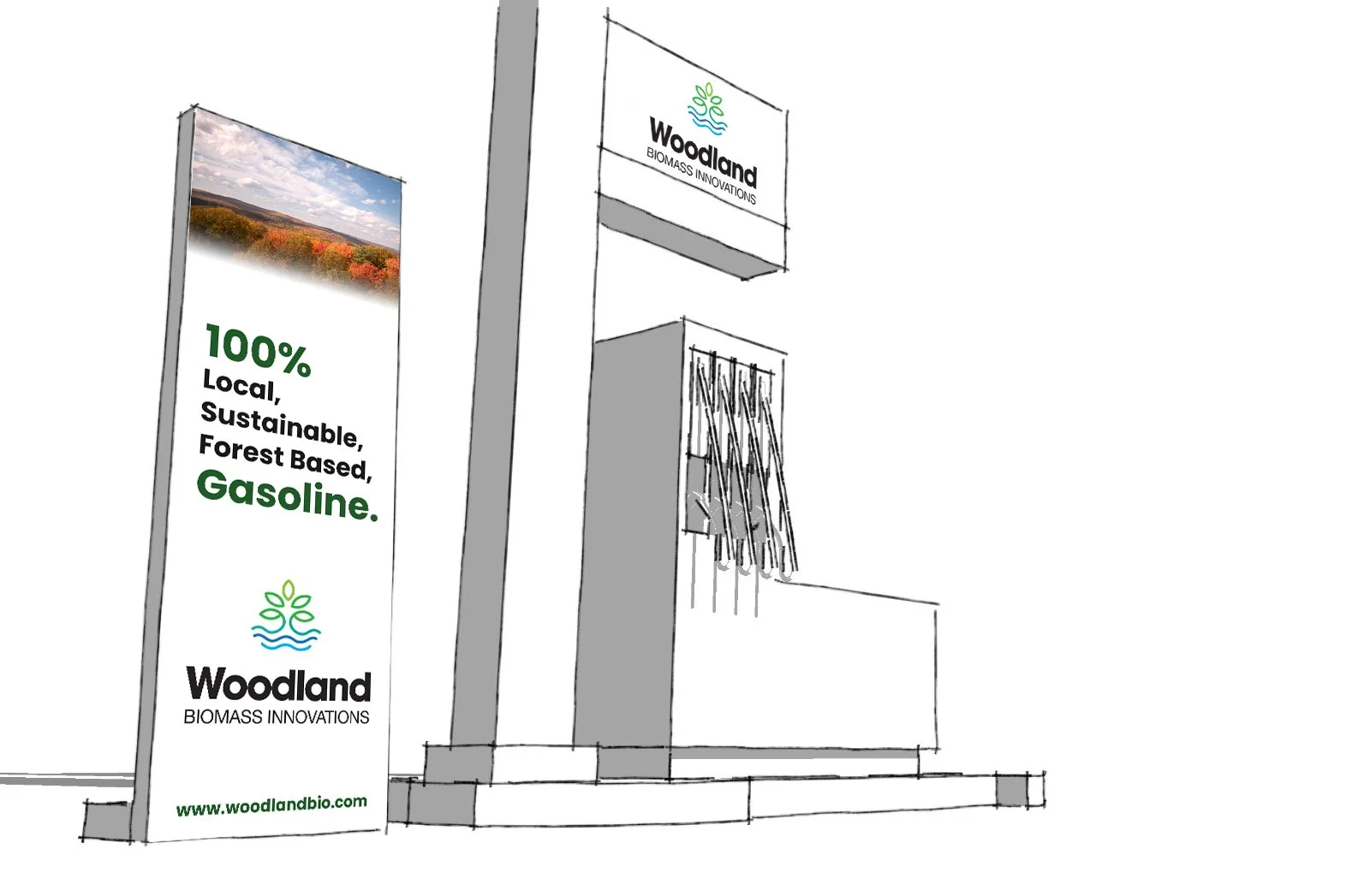
Add dedicated 100% Woodland BIO pumps
Convert priority sites to 100% renewable gasoline
Why retailers partner with Woodland BIO
Customer-ready benefits: Lower-carbon, locally made, cost-competitive gasoline
Brand lift: Community investment, forest stewardship, and circular-economy leadership
Zero compatibility risk: Full interchangeability with fossil gasoline
FAQs
What does “drop-in gasoline” mean? It’s chemically compatible with today’s engines and pipelines. Drivers can fill up anywhere, mix fuels seamlessly, and never change a thing about their vehicle.
How is this different from ethanol blending? Woodland BIO gasoline is hydrocarbon gasoline that meets RBOB specs, not an oxygenate. It blends interchangeably with refinery gasoline without vehicle modifications or blend limits.
Is there enough wood without harming forests? Yes. Pennsylvania’s sustainably managed hardwood forests have more growth than removals. Creating markets for low-grade material helps fund selective cuts that improve long-term forest health and biodiversity.
What else do you produce?
Biochar for agriculture, remediation, industry, and carbon removal
Renewable electricity when generation exceeds internal needs
Where is the first facility? Wellsboro, Pennsylvania, with regional partners across forestry, economic development, and state agencies.
How soon can this scale? The first commercial facility design follows standardized Front End Loading (FEL) engineering (FEL-1 to FEL-3) toward a final investment decision, construction, and commissioning. The model is designed to be replicable in forested regions.
Join Us on This Journey
We invite you to follow our progress and engage with us as we explore the potential of biomass-to-fuel technology on social media! You can find us on LinkedIn, Facebook, & Instagram.
If you are interested in investing in Woodland BIO follow this link: https://www.woodlandbio.com/invest